Wet wipes blocking pipes: what NZ councils say
Wet wipes block pipes because they are made to hold together when wet, and in the sewer they snag, tangle and bind with cooking fat into fatbergs. Every major NZ utility gives the same advice: flush only pee, poo and toilet paper, and put wipes in the bin. Water New Zealand has estimated that clearing blockages caused by wipes and other non-flushables costs at least $16 million a year.
Why wipes cause blockages
Toilet paper is designed to come apart in water quickly. A wipe is designed to stay in one piece while it sits soaked in its packet and while you use it. When Consumer NZ put 11 wipes sold as flushable through a test device, all of them stayed intact apart from the occasional small tear, while toilet paper started to break down within minutes.
Once a wipe is in the pipes, it can catch on joints, cracks and tree roots. Watercare says wipes that don't break down properly can snag on tree roots and build into fatbergs when cooking fats or oils go down the sink. Many wipes also contain synthetic fibres such as polyester or polypropylene, which Whakatāne District Council notes stick around for a very long time. Our guide on what wet wipes are made of covers the materials.
What a fatberg is
A fatberg is a mass of fat, oil and grease that has cooled and hardened in a sewer, with wipes and other rubbish caught up in it. Watercare says most pipe blockages are a mix of rubbish plus fats and oils, and that fats and oils solidify as they cool.
Whakatāne District Council has described what its staff pull out: wet wipes, undies, towels, rope, wire and clothes pegs, all held together with cold cooking fat and oil. The same council has reported an island of wet wipes clogging the Edgecumbe wastewater ponds.
What councils around New Zealand say
The message is consistent from one end of the country to the other.
- Watercare (Auckland): flush only the three Ps, pee, poo and toilet paper. Wet wipes go in the rubbish bin because they don't break down and can block pipes, which can cause overflows.
- Tauranga City Council: around two tonnes of wet wipes are removed from Tauranga's wastewater system every week. Only pee, poo and paper should be flushed.
- Whakatāne District Council: remember the three Ps, only flush toilet paper, pee or poo, and nothing else.
- Queenstown Lakes District Council: keep a small bin next to your toilet for anything that isn't one of the three Ps.
- Water New Zealand: products sold as flushable may not meet their own claims, and they should go in the bin rather than the toilet.
What it costs
Water New Zealand has put the national cost of clearing wipe-related blockages at at least $16 million a year, and in 2019 it reported that sewer overflows caused by flushed wipes had risen fivefold since 2015 to 2016.
Watercare says it spends about $5.5 million a year cleaning up wastewater overflows caused by these types of blockages in Auckland. In 2023, four Auckland local boards cited a figure of $4 million a year to remove flushable wipes from the network and asked for a ban. Tauranga City Council says a single overflow can cost more than $5,000 to investigate, clean up and monitor.
Those are public costs, paid by ratepayers. A blockage on your side of the boundary is a private cost. Tauranga's guidance is that blockages in private pipes are the expense of the property owner or landlord. If you are dealing with one now, our guide to what to do if wipes block your toilet has the steps.
The flushable label and the new standard
Since May 2022 there has been a voluntary Australian and New Zealand standard, AS/NZS 5328:2022 Flushable products. Watercare says products must pass six tests showing they won't harm wastewater networks or treatment, and must attest that they contain no plastic, before they can carry the approved flushable symbol.
That makes the rule easy to follow. If a wipe carries the symbol, it has passed. If it doesn't, the word flushable on the pack doesn't mean much. Watercare's advice is to look for the symbol, and if it doesn't have it, don't flush it. Our flushable wipes NZ guide goes into the testing.
How to keep wipes out of your pipes
Most of this is habit rather than effort.
- Keep a small bin with a lid next to the toilet so binning a wipe is as easy as flushing it.
- Only flush wipes that carry the AS/NZS 5328 flushable symbol.
- Pour cooled cooking fat and oil into a container for the rubbish, and wipe greasy pans with a paper towel before washing them, as Whakatāne District Council suggests.
- Bin sanitary products, nappies, cotton buds and dental floss too. Watercare lists all of them as things that don't belong in the toilet.
- If you like the damp clean of a wipe, put a toilet paper foam on dry paper instead, so you only flush toilet paper.
A foam instead of a wipe
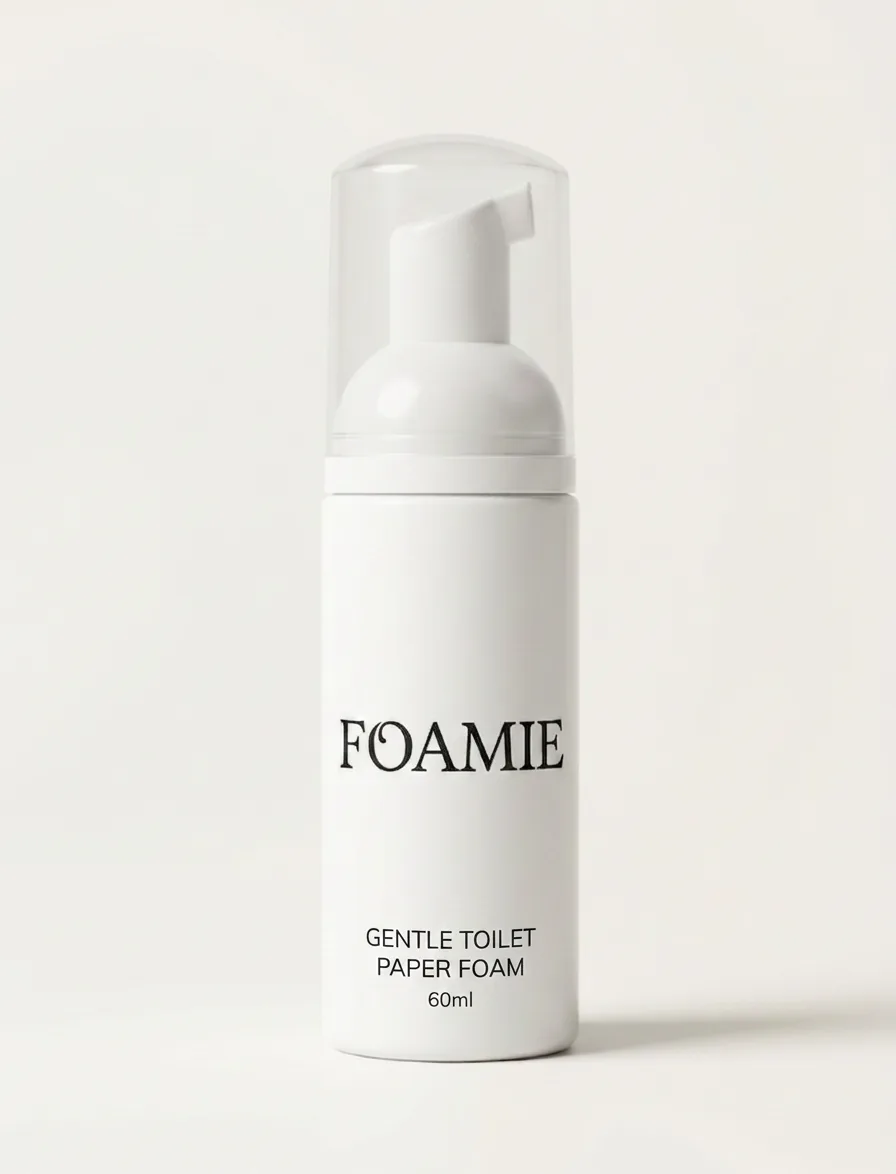
If the bin by the loo is what keeps sending wipes down the toilet, removing the wipe altogether is the simpler fix. Foamie Gentle Toilet Paper Foam goes onto three or four sheets of ordinary toilet paper, one pump at a time. What goes in the toilet afterwards is toilet paper. A 60 ml bottle is NZ$19.95 and gives roughly 400 pumps, and the product page has a sign-up to hear when stock is back if it has sold out. For other options, see our wet wipe alternatives guide.
Questions people ask
Do wet wipes really block pipes? +
Yes. NZ utilities including Watercare, Tauranga City Council and Whakatāne District Council all report wipes in blockages and fatbergs, and Water New Zealand estimates wipe-related blockages cost at least $16 million a year to clear.
Who pays if wipes block my pipes? +
It depends where the blockage is. Councils pay for the public network, which ratepayers fund. Tauranga City Council's guidance is that blockages in private pipes are the cost of the property owner or landlord.
Are biodegradable wipes OK to flush? +
Not unless they carry the AS/NZS 5328 flushable symbol. Biodegradable describes what happens over a long time, not whether a wipe breaks up quickly in a sewer.
What is the three Ps rule? +
Only flush pee, poo and toilet paper. It is the rule Watercare, Tauranga, Whakatāne and Queenstown Lakes councils all use. Everything else goes in the bin.
Sources
- Watercare: if it's not toilet paper, pee or poo, it doesn't belong in the loo (19 Nov 2024)
- Watercare: new flushable standard aimed at protecting our pipes
- Supermarket News: Consumer NZ test of 11 flushable wipes
- 1News: Water New Zealand says blockages cost $16 million per year (8 Apr 2019)
- 1News: Auckland boards push for flushable wipes ban amid $4m annual removal cost (27 Nov 2023)
- Tauranga City Council: save our pipes from wipes
- Whakatāne District Council: fatbergs found in Whakatāne and Murupara wastewater systems
- Whakatāne District Council: island of wet wipes clogs Edgecumbe ponds
- 1News: stop flushing your wet wipes, Queenstown Lakes District Council says (15 Mar 2020)