What are wet wipes made of?
A wet wipe is a sheet of non-woven fabric soaked in a cleansing liquid. The sheet is where the plastic question lies: many wipes are made partly or wholly from plastic fibres such as polyester or polypropylene, while others use plant-based fibres such as viscose, lyocell or cotton. UK government estimates put the share of wipes containing plastic at somewhere between a quarter and a half, and packs often don't say which kind you are holding.
The two parts of a wet wipe
Every wet wipe has two parts: the sheet and the liquid it is soaked in. The UK government, in its consultation on banning wipes that contain plastic, defines a wet wipe as a non-woven fabric soaked in liquid and not designed for reuse. That covers baby wipes, cosmetic wipes and toilet wipes alike.
The liquid is mostly water, usually with a mild cleanser, a humectant to stop the sheet drying out, a preservative so the pack stays good once opened, and sometimes fragrance. It is the sheet that decides whether a wipe falls apart in water or holds together, and whether it contains plastic.
What the sheet is made from
Non-woven means the fibres are bonded together in a web rather than woven or knitted like a cloth. Manufacturers blend different fibres to get the strength, softness and price they want. Broadly they fall into two groups.
- Plastic fibres: polyester (often listed as PET) and polypropylene are the common ones. They are strong when wet and cheap, and they do not break down in the way paper does.
- Plant-based fibres: viscose, lyocell and cotton. The UK government notes these are not classed as plastic under UK chemical rules.
- Bio-based plastics: materials such as polylactic acid (PLA) and polyhydroxyalkanoate (PHA) are made from plants but are still plastics. The UK ban treats them as plastic.
How many wipes contain plastic?
Nobody knows exactly, partly because wipes don't have to say. A Scottish Government impact assessment notes that wet wipes are not currently required to state their plastic content on the packaging, and that only a quarter of the products reviewed for it said whether they contained plastic.
The best available estimates come from the UK. In the UK government's consultation, manufacturers said about half of the wipes they produce contain plastic. The Scottish assessment treated 25% and 50% as the low and high ends of the share of wipes containing plastic, and used a midpoint of 37.5%.
Wipes sold as flushable are not exempt. A study led by NUI Galway in Ireland, reported in 2020, found that half of the wet wipe brands labelled flushable that it examined contained plastic microfibres. Closer to home, Whakatāne District Council notes that although wipes appear to be made of cotton, most consist of polypropylene or polyester and stick around for a very long time.
Why the plastic matters
In pipes, plastic fibres give a wipe the strength to snag, tangle with other wipes and bind with fats and oils into fatbergs. Watercare says wipes that don't break down properly can catch on tree roots and build up into fatbergs, and it spends about $5.5 million a year cleaning up wastewater overflows caused by these types of blockages.
Outside the pipes, plastic wipes add to litter and microplastics. The UK's stated aim for its ban is to reduce plastic litter and microplastics entering waterways, and the Chartered Institute of Environmental Health, reporting on the ban, cites Defra beach litter data showing an average of 20 plastic-containing wet wipes on every 100 metres of UK beach.
How to tell what your wipes are made of
Start with the pack, but don't expect it to be complete. Look for a fibre or material line as well as the ingredient list for the liquid. Words such as polyester, PET, polypropylene or PP mean plastic. Viscose, lyocell or cotton on their own suggest a plant-based sheet.
Be careful with general words. Natural, biodegradable or eco on the front tells you nothing about whether a wipe will break up in a pipe. If the pack says nothing about the sheet at all, assume it may contain plastic, and either way, put it in the bin rather than the toilet unless it carries the AS/NZS 5328 flushable symbol.
What the rules say
The UK has moved furthest. England is banning the sale of wet wipes containing plastic from spring 2027, with medical and industrial uses exempted. In New Zealand there is no ban. In 2023, four Auckland local boards asked for flushable wipes to be made a priority product under the Waste Minimisation Act, while Watercare said it did not propose a ban and wanted wipes put in the bin.
The joint Australian and New Zealand flushable standard, AS/NZS 5328:2022, is the nearest local rule. Watercare says products must pass six tests and attest that they contain no plastic to carry the flushable symbol.
Skipping the sheet altogether
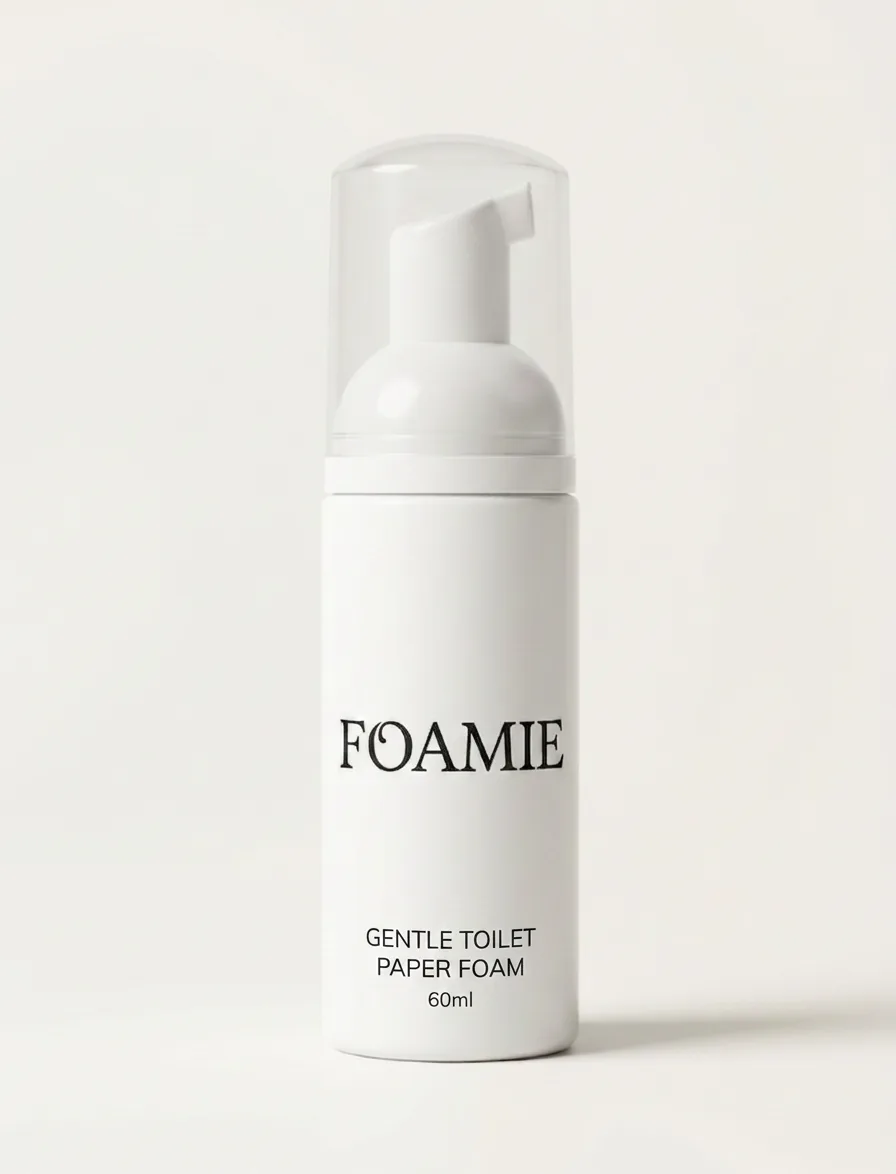
If you would rather not deal with wipes at all, a toilet paper foam gives you a damp clean on ordinary toilet paper, so there is no extra sheet and nothing but paper goes in the toilet. Foamie Gentle Toilet Paper Foam lists its ingredients as Aqua, Lauryl Glucoside, Sodium Coco-Sulfate, Glycerine, Parfum, Panthenol, Citric Acid, Benzyl Alcohol and Dehydroacetic Acid. A 60 ml bottle is NZ$19.95 and gives roughly 400 pumps, about 5 cents a use. The product page has a sign-up to hear when stock is back if it has sold out, and our wet wipe alternatives guide covers other options.
Questions people ask
Do all wet wipes contain plastic? +
No. Some use plant-based fibres such as viscose, lyocell or cotton. UK estimates suggest between a quarter and a half of wipes contain plastic, but many packs don't say either way.
Are plastic-free wipes flushable? +
Not automatically. A plastic-free wipe can still be too strong to break up in a pipe. Only wipes that pass the AS/NZS 5328 flushable standard and carry its symbol are designed to be flushed.
Is PLA in wipes plastic? +
Yes. Polylactic acid is a bio-based plastic. It is made from plants, but the UK treats it as plastic under its wet wipes ban.
Are wet wipes banned in New Zealand? +
No. Some Auckland local boards called for a ban on flushable wipes in 2023, but there is no ban. The advice from NZ utilities is to put wipes in the bin.
Sources
- UK Government: wet wipes containing plastic, summary of responses and government response
- Scottish Government: ban on the supply and sale of wet wipes containing plastic, final business and regulatory impact assessment
- Irish Times: half of flushable wipes contain microplastics, study (23 Jun 2020)
- Whakatāne District Council: island of wet wipes clogs Edgecumbe ponds
- Watercare: new flushable standard aimed at protecting our pipes
- CIEH: wet wipes containing plastic banned from 2027 (4 Dec 2025)
- 1News: Auckland boards push for flushable wipes ban amid $4m annual removal cost (27 Nov 2023)