What to do if wipes block your toilet
If wipes have blocked your toilet, stop flushing, then try a plunger, and if that doesn't shift it, a toilet auger. If water backs up anywhere else in the house or overflows outside, the blockage is further down the drain and it is time to call a plumber or drainlayer, or your council or water utility if it looks like a public pipe. Don't wait for the wipe to dissolve, because it won't.
Step 1: stop flushing
A blocked toilet can take a second flush before it overflows, so don't try again to see if it clears. If the bowl is close to the rim, take the lid off the cistern and close the flapper by hand, or turn off the water at the isolation valve near the base of the toilet if there is one.
Put old towels down around the toilet before you start. Rubber gloves are worth it.
Step 2: work out how far down the blockage is
Check the rest of the house. If only the toilet is slow, the wipe is probably stuck in the toilet's own bend or close to it, which you can often clear yourself.
If the shower or basin drains slowly too, or water is coming up in the gully trap outside, the blockage is further along the drain. A plunger rarely fixes that, and it is a job for a plumber or drainlayer.
Step 3: use a plunger properly
A flange plunger, the kind with a soft extra lip under the cup, seals into a toilet outlet far better than a flat sink plunger. Make sure there is enough water in the bowl to cover the cup.
Push down slowly first to let the air out, then work it up and down firmly a dozen or so times while keeping the seal. The pull is as important as the push, because it can draw a wipe back out of the bend. If the water drops away with a gurgle, flush once with the lid down and watch the level.
Step 4: try a toilet auger
If plunging doesn't work, a toilet auger, also sold as a closet auger, is the next tool. It is a short flexible cable inside a rigid tube with a rubber sleeve that protects the bowl's glaze. Feed the end into the outlet, crank the handle to push the cable through the bend, and either break through the blockage or hook the wipes and pull them back out.
Wipes are tough and stringy, so hooking and pulling them out often works better than trying to push them further down the drain.
Step 5: know who to call
In general, pipes on your side of the property boundary are yours. Watercare says it's your responsibility to maintain all the pipes, fittings and devices on your side of the point of supply, which is the joint where your pipe meets the public pipe, or where your pipe leaves your property. Whakatāne District Council says blockages on private property are the responsibility of the property owner, and Tauranga City Council notes that blockages in private pipes are a cost for the owner or landlord.
If the problem is in your private drainage, call a plumber or drainlayer. If wastewater is overflowing on your property or on public land, Watercare asks Auckland customers to report it on (09) 442 2222, press 1, so it can check whether the cause is in the public network. Elsewhere, call your local council or water utility. Whakatāne's council suggests having a registered drain professional check where the fault is if you are unsure.
If you rent, tell your landlord or property manager straight away rather than calling a plumber yourself.
Why the wipe won't just dissolve
Toilet paper is made to fall apart in water, and wipes are made to hold together. When Consumer NZ tested 11 wipes sold as flushable, all of them stayed intact apart from the occasional small tear, while toilet paper started breaking down within minutes. Palmerston North City Council says ninety per cent of wet wipes on the market are made from polyester or polypropylene fabrics, and that blockages form when wipes mix with fats, oils and grease from sinks.
So leaving it overnight and hoping is unlikely to help. A wipe that has caught once tends to catch the next one too.
Stop it happening again
Flush only pee, poo and toilet paper, which is the rule Watercare, Palmerston North and other councils give. Keep a small lidded bin beside the toilet for anything else, and bin any wipe that doesn't carry the AS/NZS 5328 flushable symbol, even if the pack says flushable.
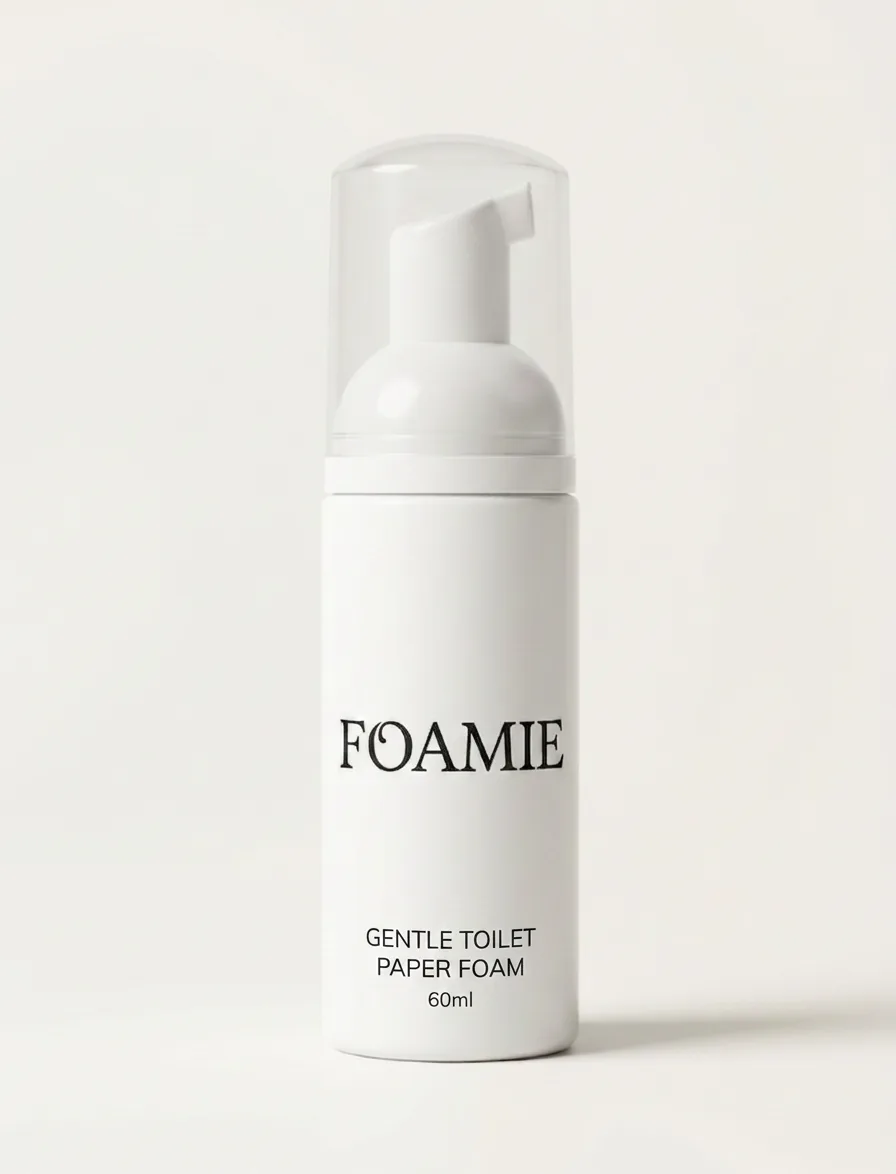
If the wipes were there for a damp clean, a toilet paper foam gives you that while only ordinary toilet paper goes down the loo. With Foamie Gentle Toilet Paper Foam you fold three or four sheets, press the pump once and wait about two seconds. A 60 ml bottle is NZ$19.95 for roughly 400 pumps. It is on the product page, with a sign-up to hear when stock is back if it has sold out.
Questions people ask
Will a wet wipe eventually dissolve in the toilet? +
Not in any useful time. Consumer NZ's testing found wipes stayed intact while toilet paper broke down within minutes, so a wipe blockage usually needs to be plunged, hooked out or cleared by a professional.
Who pays to fix a blocked drain in NZ? +
Generally the property owner pays for blockages on their side of the point where the private pipe meets the public network. Faults in the public network are the council's or water utility's to fix. Check with your local council if you are unsure.
How do I know if the blockage is in the public sewer? +
You often can't tell from inside the house. If wastewater is overflowing on your property or public land, report it to your water utility, which in Auckland is Watercare on (09) 442 2222, press 1. A plumber or drainlayer can also locate the blockage.
Can a plunger make a wipe blockage worse? +
It can push a wipe further along, which is why the pull stroke matters. If a few rounds of plunging don't clear it, switch to a toilet auger or call a plumber rather than keep going.
Sources
- Watercare: who is responsible for pipes
- Watercare: when to report a fault
- Whakatāne District Council: wastewater blockages
- Tauranga City Council: save our pipes from wipes
- Palmerston North City Council: residents urged not to flush wet wipes (25 Oct 2024)
- Supermarket News: Consumer NZ test of 11 flushable wipes
- Watercare: if it's not toilet paper, pee or poo, it doesn't belong in the loo (19 Nov 2024)